

Between meetings, homework, the parents’ WhatsApp class group, scheduling clashes, and “Who is still going to buy the present for the children’s birthday party?”, daily life may appear organisationally functional while becoming emotionally fragile remarkably quickly. This is precisely where emotional intelligence (EI) becomes a key resource: not as a vague well-being concept, but as a practical competence that helps people remain clear-headed under pressure, repair conflicts more quickly, and sustain stable relationships.
EI does not mean “always being nice”. Rather, it concerns perception plus regulation: you recognise what is happening within yourself (or in the other person), name it accurately, and then decide how to act, instead of slipping into autopilot.
A foundational scientific definition was provided by Salovey and Mayer, who describe EI as the ability to observe one’s own and others’ feelings, distinguish among them, and use this information to guide thinking and action:
“We define emotional intelligence as the subset of social intelligence that involves the ability to monitor one’s own and others’ feelings and emotions, to discriminate among them, and to use this information to guide one’s thinking and actions.”
(Salovey & Mayer, 1990; source below)
Why EI Matters Even More Now: Digitalisation and Remote Work
As communication increasingly takes place via chat, email, or video calls, many of the softer interpersonal cues are lost: posture, micro-expressions, and subtle shifts in tone. At the same time, the risk of misunderstanding increases: something may “sound harsh” or “come across as dismissive”. In this context, EI functions almost like a translator: it enables you to attend more deliberately to tone, timing, and context, and to ask before interpreting.
For families, there is a second important factor. Many working parents live in a state of constant transition between work mode and parent mode. EI helps people manage this shift intentionally, rather than carrying the emotional residue of work straight into family life.
What Emotional Intelligence Means in Professional and Family Life
EI becomes practically useful when understood as four trainable capacities:
- Self-awareness (What is happening within me?)
- Self-regulation (How do I steer my behaviour?)
- Empathy (What is happening in the other person?)
- Social competence (How do we solve this as a team?)
These capacities are not a matter of fixed personality. They are more akin to physical fitness: developed through repetition and hardest to access under stress. This is precisely why brief, realistic tools are so valuable.
Self-Awareness: “What Am I Feeling Right Now – and Why?”
Self-awareness is the foundation for everything else. If you do not notice that you are feeling irritable, ashamed, or overwhelmed, you cannot regulate yourself effectively. Many parents do not fail here because they lack skill, but because life moves too quickly.
Situations in Which Self-Awareness Commonly Breaks Down
- In the morning: time pressure, a child dawdling, and you are already mentally in meeting mode.
- In the afternoon: moving straight from work to family responsibilities without transition.
- In the evening: exhaustion, “just one more” email, and a conflict over something minor.
Practice: The 15-Second Check-In
- Name the emotion: anger, anxiety, disappointment, overwhelm?
- Rate the intensity (0–10): how strong is it?
- Identify the underlying need: rest, support, clarity, recognition, sleep?
Simply naming the feeling often reduces its force, because the brain shifts from alarm mode to orientation mode: Ah, this is overwhelm, not proof that I am incapable.
Mini-Exercise: “Body First”
If words do not come easily, use the body as a guide:
- Tight chest → often stress or anxiety
- Hot head → often anger
- Heavy body → often exhaustion or sadness
Only then look for the appropriate words.
Self-Regulation: Taking Emotions Seriously Without Handing Them the Steering Wheel
Self-regulation is the difference between “I am angry” and “I raise my voice.” Emotions are permissible; behaviour remains governable. For parents, this means: you may feel irritated, but you do not have to shout. You may feel anxious about finances, but you do not need to catastrophise at night. You may feel unfairly treated, but you do not need to react in ways that wound.
Why Self-Regulation Is Difficult in Family Life
- Sleep deprivation reduces impulse control.
- Permanent availability across work and childcare increases irritability.
- Mental load makes small issues feel like the final straw.
Tools That Work Because They Are Brief
- The 90-second rule: delay your reaction; stand up once, get a glass of water, relax your shoulders.
- Speak more quietly instead of more loudly: if you notice your voice rising, deliberately lower it by around 20%. This prompts the nervous system to down-regulate.
- The “I’m starting again” phrase: a reset without loss of face.
Example (at home):
“I can feel I’m at an 8 out of 10 just now. I need two minutes, then we can continue.”
This is not withdrawal; it is self-leadership.
Example (at work, remotely):
“I think we may be talking at cross purposes. Let me briefly summarise what I’ve understood…”
That sentence combines emotional regulation with social competence.
Empathy: Connection Before Solution
Empathy is often the first thing to disappear in family life when stress levels rise. People want to solve the problem immediately (“Well then just do it like this!”) rather than first trying to understand. The difficulty is that, without connection, a solution tends to feel like criticism.
Brené Brown captures the core idea succinctly:
“Empathy is feeling WITH people.”
(see source below)
What “WITH” Means in Family Life
- You place yourself inwardly beside the person, not above them.
- You communicate: you are not alone with this feeling.
- Only then do both brains become capable of moving back towards a solution.
Empathic Phrases That Do Not Sound Artificial
- “That’s a lot just now, isn’t it?”
- “I can see that this has really affected you.”
- “Tell me briefly what feels worst about it.”
Example: Child and Homework
Child: “I can’t do this!”
Empathic opening: “This feels really hard at the moment.”
Then: “Shall we find just the very first step together?”
In this way, struggle becomes a team moment.
Example: Couple and Money/Organisation
Partner: “You never deal with X!”
Empathic opening: “You feel left alone with that.”
Then: “Let’s make it concrete: what exactly is X, by when does it need doing, and who is taking which part?”
Empathy does not mean accepting everything. You can be empathic and still set limits:
“I understand that you are angry. I still want us to speak without insults.”
Social Competence: Managing Conflict Without Burning the Relationship
Social competence is the ability to keep the relationship itself in view as something valuable, even during conflict. In family life, this means that you do not merely want to be right; you also want everyone to be able to live well together afterwards.
Three Conflict Patterns EI Helps to Defuse
- A small issue becomes a major argument
When the real drivers are exhaustion or feeling unseen. - Accumulation
(“And another thing — remember back then…”) - Lack of repair
The argument ends, but the tension remains.
A Practical Conversation Structure
(10 minutes, workable even when tired)
- 1 minute: What exactly is this about? (one issue only)
- 3 minutes: Each person says: “I feel… because… I need…”
- 3 minutes: Collect options (without evaluation)
- 3 minutes: Agree on a decision, next step, and a brief check: “Does this feel fair?”
This may sound rather formal, but it functions like a guardrail: it prevents the conversation from going in circles.
Family Team Language
- Instead of “You never do…” → “What I’m missing is…”
- Instead of “You always have to…” → “How shall we divide this up?”
- Instead of “It’s not that bad” → “I can see that it feels bad for you.”
Working with Difficult Emotions
Anger, Guilt, Shame, and Overwhelm
EI becomes especially important when emotions are uncomfortable. Not because they must be eliminated, but because they often contain useful information for stabilising your system.
Anger: Often a Protective Response to Boundary Violations and Overload
Anger often arises when:
- boundaries have been crossed (“everyone wants something from me”),
- you feel powerless,
- you have been functioning for too long without pause.
EI sequence:
Recognise the anger → identify the need beneath it → formulate the boundary clearly.
Example:
“I’m angry because I haven’t had a break in three hours. I need 15 minutes of quiet, then I’ll be available again.”
Guilt: Constructive versus Destructive
- Constructive guilt motivates repair:
“I forgot it — I’ll make it right.” - Destructive guilt turns into identity:
“I’m a bad mother / a bad father.”
EI here means translating guilt into small, concrete action:
“Today I was short with you. I’m going to give you ten minutes of real listening now.”
That is often more effective than grand promises.
Shame: “There Is Something Wrong with Me”
Shame isolates. People speak less, withdraw, become harsher, or grow more perfectionistic. EI means bringing shame into the light, ideally with a safe person. This is not overdramatic; it is a form of relief. Connection reduces shame.
Overwhelm: The System Is Overloaded, Not You as a Person
When everyday life is too full, “more discipline” is rarely the answer. In such moments, EI is also a form of structural intelligence:
- What are the three priorities this week?
- What can be removed, reduced, or delegated?
- Where do we need support, even temporarily?
A Practical Parenting Hack: Standardisation, Not “Optimisation”
- rotate 10 standard evening meals
- have one fixed day for packing sports kit
- keep one weekday entirely free of appointments
EI as a Family Culture: Small Rituals, Significant Effects
Emotional intelligence becomes more stable when it appears not only in crises, but as part of ordinary routine.
1) The Three-Word Check-In
(2 minutes)
Each person says three words describing their current state. This creates closeness quickly, without requiring anyone to tell a long story. It normalises emotion: tired today, better tomorrow; both are acceptable.
2) Repair as Standard
(the relationship airbag)
“I was abrupt just now. I’m sorry. Let me try again.”
Children learn from this that conflict is not dangerous when repair is possible. It is a quiet but powerful resilience factor.
3) Expanding Emotional Vocabulary
(for children and adults alike)
If we know only “good” or “bad”, our responses will also remain blunt. If we can differentiate — tense, disappointed, uncertain, overwhelmed, relieved — we respond more appropriately.
And once more, as a guiding principle: EI means observing feelings, distinguishing among them, and using them to guide behaviour, exactly as Salovey and Mayer define it:
“…monitor one’s own and others’ feelings and emotions, to discriminate among them, and to use this information to guide one’s thinking and actions.”
(Salovey & Mayer, 1990)
Conclusion
- Emotional intelligence helps working parents recognise feelings earlier, regulate them more effectively, and resolve conflict in ways that preserve connection.
- It includes self-awareness, self-regulation, empathy, and social competence — all of which can be trained through small routines.
- Even brief rituals such as check-ins, repair statements, and clear requests can reduce stress and strengthen relationships.
Reflection Questions
- In which everyday situation do I most often become emotionally dysregulated — mornings, homework, or evenings — and what need lies beneath that reaction?
- Where do I move too quickly into “solution mode” when empathy is needed first?
- Which repair phrase would I like to establish as a standard sentence, so that arguments do not linger?
Further Video Resources
- Brené Brown – “Brené Brown on Empathy (RSA Short)”
https://www.facebook.com/brenebrown/videos/bren%C3%A9-brown-on-empathy-the-rsa/819331031752289/
- Brené Brown on Empathy – Transcript / Supplementary Material
https://ecampusontario.pressbooks.pub/app/uploads/sites/2979/2021/11/Brene-Brown-on-Empathy-Video-Transcript-.docx
Sources
- Salovey, P. & Mayer, J. D. (1990): Original definition
http://nwkpsych.rutgers.edu/~kharber/emotions/Class%20Readings/PSYCHOLOGY%20OF%20EMOTIONS%20READINGS%202021/Salovey.Meyer.Emotional.Intelligence.1989_90.pdf
- Brené Brown: “Empathy is feeling WITH people.”
https://ecampusontario.pressbooks.pub/app/uploads/sites/2979/2021/11/Brene-Brown-on-Empathy-Video-Transcript-.docx
Your Opinion?
Author
Dr. Karl-Maria de Molina
CEO & Co-Founder ThinkSimple.io
Project Manager and Chairman of Family Valued e. V.
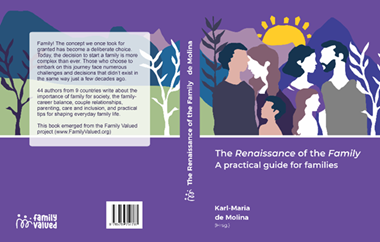
For further Information about the book: “The Renaissance of the Family”
#familyvalued #Therenaissanceofthefamily #FamilyCareerBalance #Kindergarden #Care #Inclusion #Strongfamilies ##worklifebalance #Motherhood #demography #familyandsociety #couplerelationship #parenting #grandparents #CareWork #Parenting #Parenthood #Carework #WorkFamilyEnrichment #Parenting #RaisingChildren #Mindset #Family #ParentingSkills #Relationship