

Equality as the Foundation for a Harmonious Partnership
In modern society, marriage equality is often discussed as a central topic. However, this is not about a rigid 50/50 division of all tasks, but rather a balanced approach that considers the individual strengths, needs, and desires of both partners. This article highlights the characteristics of balanced equality. It not only helps prevent inequalities but also strengthens emotional connection, reduces conflict, and enables a self-determined approach to the relationship. Traditional gender roles, as historically shaped, unnecessarily burden couples, whereas balanced equality fosters freedom and respect.
The Importance of Balance: Moving Away from Stereotypes Towards Individual Freedom
Balanced equality means that traditional gender roles – such as the man as the breadwinner and the woman as responsible for the home and children – are not automatically adopted. Instead, it involves a conscious negotiation that questions societal expectations. Historically, patriarchal structures often placed women in positions of dependency, which the women’s rights movement has challenged. Today, studies show that couples in which both partners feel equally involved in decision-making are more stable and satisfied – regardless of income or professional status.
A key characteristic is freedom of choice: couples should define their roles themselves without external pressure. Whether it’s a classic division of labour or another variant – what matters is that it is voluntary and reflective. Critics like Emilia Roig warn that subtle inequalities in the division of labour or emotional responsibility can persist. Balance, therefore, does not mean uniformity but rather a framework that guarantees individual freedom.
Key Characteristics of Balanced Equality
Based on literature analyses, the following characteristics can be derived:
1. Fair but Flexible Distribution of Responsibilities
Balanced equality includes the distribution of care work (parenting, housework, emotional support) without one partner being chronically overburdened. It’s not about an exact equal split but a balance that considers strengths and preferences. Examples from various sources include:
Household Task List: Couples create a list of tasks and estimate the time required. Each partner alternates in choosing tasks that are least burdensome for them to achieve an approximate balance.
Sharing Mental Load: Not only physical tasks but also the mental effort of remembering appointments (e.g., nursery closures) must be shared. This reduces frustration and creates space for positive interactions.
2. Reducing Conflicts Through Communication and Recognition
Conflicts often arise from unequal responsibilities. Balanced equality promotes active communication about limits and mutual recognition. Key aspects include:
Actively Wishing Well: Both partners bring goodwill and commitment to understanding each other’s needs.
Acknowledging Contributions: The partner’s efforts are actively recognised and appreciated, preventing resentment and strengthening emotional connection.
Preference Scale: For decisions (e.g., parenting styles or leisure plans), partners rate their preferences on a scale from 1 to 5. The partner with the stronger preference gets more weight, fostering trust and a willingness to compromise.
3. Considering Psychological Foundations and Self-Reflection
Equality begins with self-reflection. Psychological patterns from childhood influence behaviour. Characteristics of a balanced approach include:
Dealing with the Inner Child: As recommended by experts like Stefanie Stahl, partners regulate their reactions to enable fair negotiations.
Balancing Emotional Work: If one partner takes on more emotional stability (e.g., due to the other’s mental health issues), this must be conscious and consensual.
Setting Boundaries: Revisiting and clarifying misunderstood statements improves communication.
4. Complementary Strengths and Sacrifices Over Time
In a balanced marriage, partners complement each other’s strengths. Professional success, household responsibilities, and emotional work can be distributed differently as long as respect is maintained:
Balancing Sacrifices: Sacrifices (e.g., moving for a partner’s job) are not made simultaneously but balanced over time.
Holistic Perspective: Instead of strict equality, the focus is on a holistic balance that acknowledges differences in capabilities, strengths, and tolerances.
Challenges and Criticism: Avoiding New Constraints
Despite its advantages, societal pressure towards equality can lead to new restrictions. Critics like Eva Illouz emphasise that equality doesn’t always mean equal distribution, as long as both partners agree. The risk is that couples may feel compelled to divide everything equally, which creates stress. Balance, therefore, means using societal norms as guidance without turning them into new prescriptive rules.
Conclusion: The Key to a Fulfilling and Lasting Relationship
Equality should be understood as an opportunity to shape the relationship individually, free from societal stereotypes but also without new pressures. What matters is that both partners honestly discuss their expectations and find solutions that work for them. Societal guidelines can provide orientation, but should not become new norms that impose restrictions again.
Some Examples from Everyday Life
- Example 1: In a marriage, the wife decides to attend graduate school while the husband does not. The couple openly discusses the consequences of this decision and distributes tasks in a way that satisfies both. Here, equality is understood as the freedom to shape individual lives.
- Example 2: Another couple does not divide housework and childcare exactly 50/50, but according to personal preferences and professional opportunities. What’s important is that both feel valued and heard.
- Example 3: In some families, one partner takes primary responsibility for finances while the other handles household organisation. Roles are clearly defined, but not based on gender, instead on strengths and preferences.
Sources:
- dbb Frauen: Documentation on Gender Equality in Society
- Reddit: Experiences of Equal Partnerships
- University of Heidelberg: Bachelor’s Thesis on “Resistance to the Darkening of Marriage”
- urbia.de: Discussions on Equality in Marriage
Author
Dr Karl-Maria de Molina
CEO & Co-Founder ThinkSimple.io
Project Manager and Chairman of Family Valued
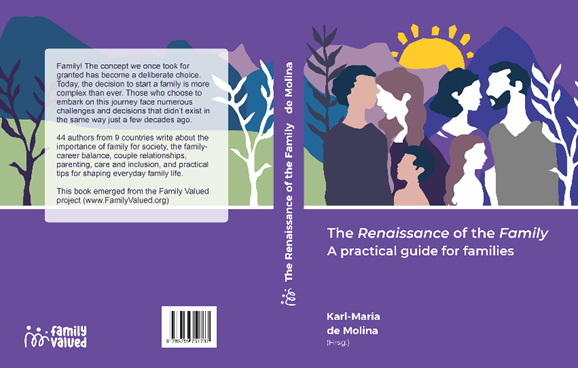
More Information in the book: https://backup.hellas-media.gr/en/renaissance-der-familie-2/
#familyvalued #Therenaissanceofthefamily #FamilyCareerBalance #Kindergarden #Care #Inclusion #Strongfamilies ##worklifebalance #Motherhood #demography #familyandsociety #couplerelationship #parenting #grandparents #CareWork #Parenting #Parenthood #Carework #WorkFamilyEnrichment #Parenting #RaisingChildren #Mindset #Family #ParentingSkills #Relationship