

Balancing family and work is one of the most significant challenges facing modern parents. A well-developed childcare infrastructure is a crucial factor in providing working parents with the support they need. Whether it involves daycare, all-day schools, holiday care, or flexible emergency and extended-hours care, these services are essential to help parents manage the balancing act between professional demands and family responsibilities.
1. Daycare Places: A Solid Foundation for Working Parents
Early childhood care in daycare centres is, for many parents, the first step back into the workforce. However, in many regions, a lack of daycare places remains a significant issue. Studies show that access to high-quality childcare not only increases parents’ professional flexibility but also promotes children’s social and cognitive development.
Challenges:
- Long waiting lists and insufficient capacity.
- High costs for private childcare facilities.
- Regional disparities in availability.
Proposed Solutions:
- Expansion of municipal and private daycare centres.
- Financial support through government subsidies or employer contributions.
- Promotion of workplace daycares, providing childcare near home or work.
“A functioning childcare infrastructure is not just a women’s issue but a societal issue. It is the foundation of equal opportunities and economic progress.”
– Dr Jutta Allmendinger
2. All-Day Schools: More Time for Work and Family Planning
All-day schools provide not only extended care hours but also an educational concept that combines learning with leisure activities. They enable parents to better plan their working hours and relieve families, especially during primary school years when children often require intensive care.
Advantages:
- Structured daily routines for children, combining learning and leisure activities.
- Relief for parents through reliable care hours.
- Promotion of social skills through group activities.
Areas for Improvement:
- Expansion of all-day school offerings, especially in rural areas.
- Ensuring high-quality care through trained staff.
- Flexible models that cater to the individual needs of families.
3. Holiday Care: An Often-Underestimated Challenge
School holidays pose significant challenges for many working parents, as they are difficult to reconcile with limited annual leave. Holiday care programmes can fill this critical gap by providing children with meaningful activities and offering parents relief.
Potential Solutions:
- Holiday programmes offered by schools, clubs, or local organisations.
- Partnerships with companies to provide specialised holiday camps.
- Financial support for low-income families to enable participation in holiday programmes.
“Childcare is more than an organisational service – it is a right of children and a prerequisite for gender equality.”
– UNICEF Report on Early Childhood Care
4. Emergency and Extended Hours Care: Everyday Flexibility
Unforeseen events such as illness, overtime, or last-minute professional commitments can create organisational difficulties for parents. Flexible emergency and extended hours care is therefore a crucial component in bridging short-term childcare gaps.
Examples of Solutions:
- Emergency childcare services that can step in at short notice.
- Extended opening hours for daycare centres and schools, particularly in the early morning and evening hours.
- Support through neighbourhood networks or workplace childcare offerings.
“Families need reliable frameworks to balance work and family. This includes not only daycare places but also flexible care hours and holiday programmes.”
– Prof. Dr Hans Bertram
5. The Role of Employers and Policymakers
A functioning childcare infrastructure is not solely the responsibility of the state. Employers can also play a vital role in promoting work-family balance. Workplace daycares, flexible working hours, and remote work options are just a few examples of how companies can support their employees.
On a political level, investments in childcare infrastructure are essential to ensure long-term equal opportunities and higher workforce participation among parents, especially women.
6. Innovative Concepts like Kiwifalter
The Family Hub Kiwifalter offers an innovative solution: it combines childcare and workspaces under one roof, with services that can be booked individually and flexibly via an app. Parents can work in Kiwifalter’s co-working space while their children are cared for in the in-house KidsSpace. The proximity to their children allows for a smooth transition back into work and promotes high employee satisfaction and retention.
More and more start-ups, freelancers, and employees appreciate the flexibility and creative atmosphere of co-working spaces. As hubs of the New Work culture, they provide a cost-effective alternative to traditional offices and foster networking and exchange.
The Family Hub takes this concept a step further by combining co-working with flexible childcare. Parents benefit from a professional workspace, including a KidsSpace and a vibrant community. Since Kiwifalter’s opening in 2019, this dynamic community has seen numerous business ventures launched.
Kiwifalter responds to the needs of modern families, offering not only work-family balance but also courses and workshops in art, music, fitness, languages, and mindfulness for both children and adults.
Conclusion: Childcare Infrastructure as the Foundation for Better Work-Family Balance
A well-developed and flexible childcare infrastructure is the key to successfully balancing family and work. It enables parents to pursue their professional goals without neglecting their children’s needs. At the same time, children benefit from high-quality care that supports their development.
However, realising this vision requires a joint commitment from policymakers, businesses, and society. Only through the expansion and improvement of existing offerings can genuine relief for families be achieved – and thus a significant contribution to a more family-friendly society.
Reflection Questions
- Which childcare services would help me or my family achieve a better balance between work and family?
Reflect on which existing services are helpful and where additional support is needed.
- How could I personally or professionally contribute to the expansion or improvement of childcare infrastructure?
Consider whether there are opportunities to get involved in your community, company, or politically.
- How important is flexibility in childcare to me, and which innovative concepts (e.g., Family Hubs) could be interesting for me?
Think about whether new approaches, such as flexible co-working models with childcare, could make your daily life easier.
Your Opinion?
Author
Dr. Karl-Maria de Molina
CEO & Co-Founder ThinkSimple.io
Project Manager and Chairman of Family Valued
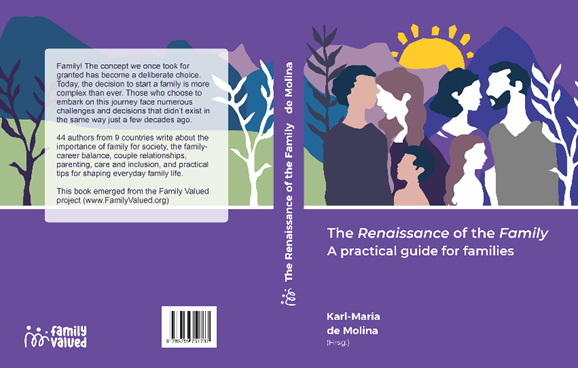
More Information in the book: https://backup.hellas-media.gr/en/renaissance-der-familie-2/
#familyvalued #Therenaissanceofthefamily #FamilyCareerBalance #Kindergarden #Care #Inclusion #Strongfamilies ##worklifebalance #Motherhood #demography #familyandsociety #couplerelationship #parenting #grandparents #CareWork #Parenting #Parenthood #Carework #WorkFamilyEnrichment #Parenting #RaisingChildren #Mindset #Family #ParentingSkills #Relationship