

Grandparents play a valuable and often indispensable role in their grandchildren’s lives. They are not only loving caregivers but also essential supporters of parents and transmitters of values and traditions. But how does this role play out in practice, and how can grandparents take on their responsibilities constructively without provoking conflicts with parents? This article explores the various facets of the grandparent role and offers practical tips.
Support for Parents and Grandchildren
In today’s society, where many parents work, grandparents often play an essential role as caregivers. They pick up grandchildren from daycare, spend afternoons with them, or step in when parents are unavailable. This support greatly eases the daily lives of parents and creates a close bond between generations.
Grandparents also bring a wealth of life experience that can guide parents in challenging parenting situations. Their care and willingness to listen are often valuable resources for parents in stressful situations. At the same time, grandchildren benefit from the special attention and affection they receive from their grandparents.
Avoiding Conflicts Through Over-Involvement
As helpful as grandparents can be, their involvement in parenting often leads to tensions. Parents may feel patronised when grandparents introduce their own parenting methods or values. Frequently, grandparents mean well, but how can such conflicts be avoided?
“It is important that grandparents respect the authority of parents in raising their children. Their role is to support, not to instruct.”
– Dr. Jan-Uwe Rogge
Tips for Parents:
- Open Communication: Address issues directly before frustration builds up. Explain to grandparents why you make certain parenting decisions and share your reasoning.
- Set Boundaries: Clearly state what is allowed and what is not. For example, you might ask them to cut back on sugary treats and suggest alternative shared activities instead.
- Practice Tolerance: Accept that different rules may apply at grandparents’ homes. Children can learn to adapt to various situations.
Tips for Grandparents:
- Respect the Parental Role: Accept that your children will develop their own parenting methods and do not question them.
- Support Rather Than Instruct: Offer advice only when explicitly asked and avoid criticising your children’s parenting unprompted.
- Be Flexible: Adapt to the parents’ wishes and parenting style, especially if you are regularly involved in caregiving.
“Grandparents have the opportunity to provide children with a sense of stability and tradition. They can pass on values and stories that help children find their identity.”
– Dr. Remo H. Largo
Passing on Values and Creating Freedom
One of the central tasks of grandparents is to pass on values and traditions. As guardians of family memory, they can share stories from the past, convey cultural values, and give grandchildren a sense of their roots.
At the same time, grandparents are often freer in their caregiving role because they do not bear the primary responsibility. This freedom allows them to open new spaces of experience for children and, of course, occasionally indulge them, in coordination with the parents.
“Grandparents must learn to step back and strengthen parents in their role. At the same time, they can offer children a safe space where they can freely develop.”
– Dr. Elisabeth Raffauf
Balancing Closeness and Boundaries
The relationship between grandparents and grandchildren changes over time. While young children enjoy closeness with their grandparents, this bond may weaken during adolescence. To maintain contact, grandparents should take an interest in the teenagers’ hobbies and be open to modern topics such as technology.
For “everyday grandparents” who are regularly involved in caregiving, clear agreements with parents are crucial. It is vital to strike a balance between indulging and taking on daily responsibilities without overstepping personal boundaries.
“Grandparents who play a significant role in daily life must essentially act in service to the parents. Agreements and working together as a team are significant here.”
– Birgit Salewski
Conclusion
Grandparents enrich the lives of their grandchildren and provide valuable support for parents. Their experience, care, and time give the children important values and unforgettable memories. At the same time, grandparents need to respect the parents’ parenting authority and avoid conflicts through open communication.
With mutual understanding and clear agreements, grandparents can play a harmonious, enriching role within the family.
Reflection Questions
- How can I, as a grandparent, support the parents of my grandchildren without questioning their parenting methods?
- What values and traditions do I want to pass on to my grandchildren, and how can I do so in a way that is relevant and enriching for them?
- How can I avoid conflicts with my grandchildren’s parents while building a close and loving relationship with my grandchildren?
Your Opinion?
Author
Dr. Karl-Maria de Molina
CEO & Co-Founder ThinkSimple.io
Project Manager and Chairman of Family Valued
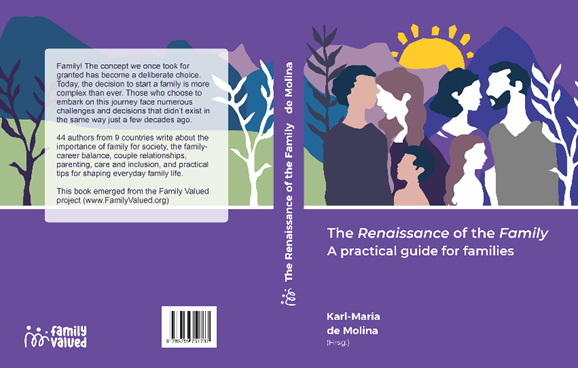
More Information in the book: https://backup.hellas-media.gr/en/renaissance-der-familie-2/
#familyvalued #Therenaissanceofthefamily #FamilyCareerBalance #Kindergarden #Care #Inclusion #Strongfamilies ##worklifebalance #Motherhood #demography #familyandsociety #couplerelationship #parenting #grandparents #CareWork #Parenting #Parenthood #Carework #WorkFamilyEnrichment #Parenting #RaisingChildren #Mindset #Family #ParentingSkills #Relationship