

Initial Guidance
Promoting Acceptance and Understanding
Parents should accept their child’s disability and engage deeply with their specific needs. This not only helps in making the best decisions but also strengthens the child emotionally.
“Acceptance of the disability is the first step to fostering and unlocking the child’s potential.”
– Oliver Heine, Inclusion and Parenting (2019)
Parental Self-Care
Caring for a child with a disability can be emotionally and physically demanding. Parents should not neglect themselves and should schedule regular breaks.
“Only parents who are balanced themselves can provide their child with the necessary strength and support.”
– Audre Lorde, Self-Care as Activism (1988)
Building a Support Network
Connecting with other families in similar situations, professionals, or support groups offers emotional support as well as practical advice.
“Community is the key to overcoming the challenges of caregiving and inclusion.”
– Albert Bandura, Social Learning Theory (1977)
Fostering Independence and Resilience in the Child
Children with disabilities should be encouraged to do as much as possible on their own to build independence and self-confidence.
“Resilience develops when children learn to overcome challenges – regardless of their disability.”
– Michael Ungar, The Resilience Research Centre (2011)
Significance for Schools
Individual Support
Schools must address the individual needs of each child and develop specific support plans. This can be achieved through close collaboration between parents, teachers, and special educators.
“Every child has the right to an education that matches their individual abilities.”
– UNESCO, Salamanca Statement (1994)
Accessibility and Adjustments
Access to education should be designed to be barrier-free. This includes structural adaptations (e.g., ramps) as well as didactic and methodological adjustments in teaching.
“Inclusion means that schools adapt to children – not the other way around.”
– Andreas Hinz, From Integration to Inclusion (2009)
Promoting Social Integration
Children with disabilities should be actively included in the classroom community to avoid isolation. This can be supported through joint projects, teamwork, and awareness-raising activities for all students.
“Inclusion is only successful when it promotes the social acceptance of diversity.”
– Klaus Klemm, Educational Equity and Inclusion (2015)
Actions Parents Can Take to Foster Inclusion
Collaboration with the School
Parents should regularly communicate with teachers and special educators to ensure that their child’s needs are being met.
“Collaboration between home and school is key to successful inclusion.”
– Hans Wocken, Inclusion: Ambition and Reality (2013)
Promoting Social Skills
Parents can help their child develop social skills by encouraging them to make friends and participate in extracurricular activities.
“Social skills are crucial for creating an inclusive environment where children with disabilities can thrive.”
– Lev Vygotsky, Interaction and Learning (1978)
Advocating for Rights
Parents should familiarise themselves with the legal foundations of inclusion, such as the UN Convention on the Rights of Persons with Disabilities, to ensure their child receives the best possible support.
“It is the parents’ responsibility to stand up for their children’s rights and advocate for equal opportunities.”
– Anne Peters, Human Rights and Inclusion (2010)
Raising Awareness in the Community
Parents can help raise awareness of their child’s needs within the school and community. Workshops or discussions with teachers and classmates can help break down prejudices.
“Inclusion begins with the willingness to understand another’s perspective.”
– Richard Sennett, Respect in a World of Inequality (2003)
Conclusion
Caring for and fostering a child with a disability requires commitment, patience, and collaboration. Parents play a crucial role not only in supporting their child’s development but also in actively shaping an inclusive environment in schools and society. Through knowledge, networks, and targeted actions, you can help your child reach their full potential and lead a fulfilling life.
Reflection Questions
- What additional steps could you take to actively promote your child’s inclusion in school and social settings?
- How well are you currently balancing the needs of your child, your family, and your own self-care? What could you improve?
- What additional support or resources could you utilise to further your child’s development and strengthen your role as a parent?
Your Opinion?
Author
Dr. Karl-Maria de Molina
CEO & Co-Founder ThinkSimple.io
Project Manager and Chairman of Family Valued
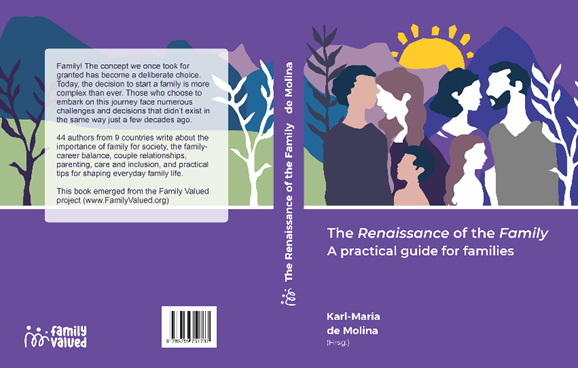
More Information in the book: https://backup.hellas-media.gr/en/renaissance-der-familie-2/
#familyvalued #Therenaissanceofthefamily #FamilyCareerBalance #Kindergarden #Care #Inclusion #Strongfamilies ##worklifebalance #Motherhood #demography #familyandsociety #couplerelationship #parenting #grandparents #CareWork #Parenting #Parenthood #Carework #WorkFamilyEnrichment #Parenting #RaisingChildren #Mindset #Family #ParentingSkills #Relationship