

The Label Jungle
Helicopter, lawnmower, submarine, permissive, over-parenting, people-pleaser: It’s hard to find a parenting guide without buzzwords. They sound dramatic – and they create uncertainty. However, behind these six popular labels are not six entirely different worlds but rather a few recurring psychological patterns. Recognising these patterns can help to de-escalate behaviour and make targeted adjustments – without spiralling into guilt.
Brief Definitions of the Labels
- Helicopter: Constant proximity, pre-planning, monitoring every little detail to cushion risks and frustration.
- Lawnmower: Obstacles (conflicts, challenges) are “mowed down” in advance so the child can move through life smoothly.
- Submarine: Mostly invisible but suddenly surfaces to take over when danger or pressure is perceived – inconsistent presence.
- Permissive: Many freedoms, few consistently enforced boundaries; focus shifts heavily to momentary desires.
- Over-parenting: Excessive steering of decisions, activities, and time – the child loses opportunities to practise self-organisation.
- People-pleaser parents: Conflict avoidance dominates – parents emotionally align themselves with the child’s immediate mood to maintain harmony.
In the accompanying graphic with the dimensions of frustration tolerance and control, we show where the above-mentioned behaviour patterns are situated, along with what behaviour would be desirable: the target zone.
Reflections on Your Own Behaviour
Some questions can help you reflect on your parenting approach:
- A. How much do I actively control? (Control vs. Autonomy)
- B. Do I remove obstacles or let my children practise overcoming them? (Protection vs. Competence-building)
- C. Am I primarily regulating my own insecurity, or addressing my children’s genuine developmental needs? (Parental anxiety vs. children’s needs)
Reasons Behind the Behaviour
Beneath the surface, three main drivers emerge:
- Avoidance of parental insecurity (fear of “missing something” or making mistakes).
- Short-term smoothing of children’s frustration (quickly alleviating discomfort, anger, or boredom).
- Social pressure (not wanting to appear “neglectful” or “too strict”).
These dynamics lead to behavioural loops: intervention → short-term relief → reduced learning opportunities → more intervention required next time.
Where Labels Can Be Misleading
The metaphors mix style with situational context. A parent may switch between patterns depending on the situation.
- “Permissive” sounds like freedom but often describes a lack of structure, not genuine autonomy.
- “Helicopter” is overused, even though situational increased proximity (e.g., during transitions) can be developmentally appropriate.
Focusing on labels shifts attention away from the key question: “What skill is my child currently not practising?”
Mini Self-Check
Mentally tick off what applied frequently to you in the past week:
- I answer my child’s questions before they have fully asked them.
- I solve problems (academic, social) without letting my child make their own attempt first.
- I find silence or boredom hard to tolerate and immediately offer distractions.
- I change rules as soon as my child reacts with visible dissatisfaction.
- Spontaneous “rescue missions”: I take over completely when stress becomes noticeable.
- I make organisational decisions (hobbies, task order) without involving my child.
- I avoid clear “no” statements out of fear of emotional escalation.
- I feel guilty quickly when my child shows frustration.
Guideline: If 4–5 points apply, it’s worth focusing on small corrections (not a “failure” – but an opportunity for development).
First Course Corrections (Micro-Interventions)
- Delay: Introduce a 60-second rule – before intervening, observe what your child tries spontaneously.
- Delegate: Assign part of a task (e.g., planning the order of homework) instead of the entire activity.
- Tolerate: Name frustration (“That’s tricky – and you’re still figuring it out”) instead of neutralising it with solutions or distractions.
- Dose: Consciously choose small challenges (e.g., slightly harder puzzles) before setting a high threshold.
- Transparency: Explain boundaries as a way to build long-term skills (“I’m letting you try it yourself first so you can see what you’re capable of.”)
- Reflect: Ask yourself three questions in the evening: Where did I give space today? Where did I pre-empt? What will I try to do slightly differently tomorrow?
Conclusion – From Labels to Mindset
Overprotection is not a fixed label, but a collection of well-meaning short-term strategies that ultimately shorten learning cycles. The key is not to eliminate all interventions but to apply them more consciously: providing space before offering support; creating structure without depriving children of experiences.
When parents shift their mindset – from fearing “getting it wrong” to recognising that “my child needs friction within a safe framework” – insecurity transforms into a developmentally supportive attitude.
Reflection Questions
- How often do I intervene before my child has the chance to find a solution independently – and how could I consciously create more space for this?
Consider how and where you could give your child more opportunities to tackle challenges on their own.
- What fears or insecurities influence my behaviour as a parent – and how can I learn to regulate them better?
Reflect on whether your reactions stem more from parental anxiety or from your child’s actual needs.
- How can I take small, targeted steps to give my child more autonomy and help them build frustration tolerance?
Think about which micro-interventions, such as delaying, delegating, or tolerating, you could integrate into your daily life.
Your Opinion?
Author
Dr. Karl-Maria de Molina
CEO & Co-Founder ThinkSimple.io
Project Manager and Chairman of Family Valued
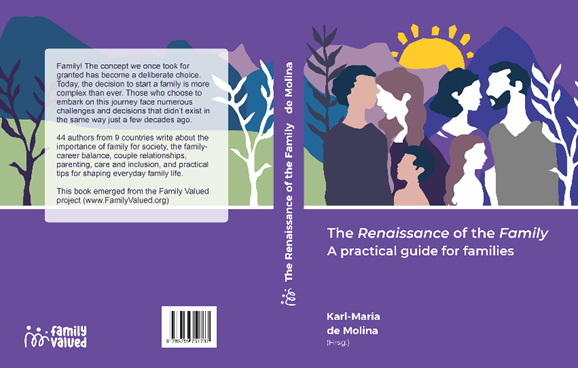
More Information in the book: https://backup.hellas-media.gr/en/renaissance-der-familie-2/
#familyvalued #Therenaissanceofthefamily #FamilyCareerBalance #Kindergarden #Care #Inclusion #Strongfamilies ##worklifebalance #Motherhood #demography #familyandsociety #couplerelationship #parenting #grandparents #CareWork #Parenting #Parenthood #Carework #WorkFamilyEnrichment #Parenting #RaisingChildren #Mindset #Family #ParentingSkills #Relationship