

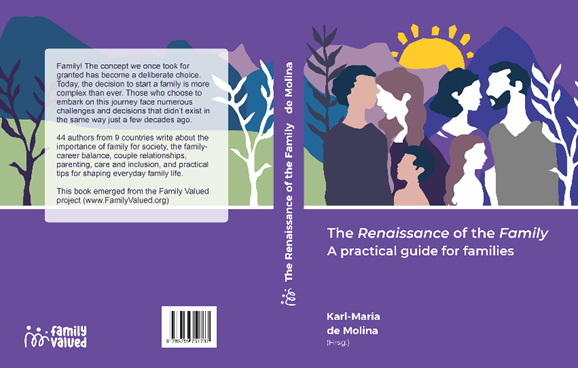
Some time ago, I watched a documentary about families in which the father was no longer present. The film showed a teenager who used to climb cranes. When asked by the journalist whether this wasn’t dangerous, he replied: “My father is no longer at home, and my mother doesn’t care what I do.” This film inspired me to explore the role of fathers in the family in the book The Renaissance of the Family. Here are some of the opinions shared by the authors of the book.
Introduction
Raising children is one of the most significant responsibilities within a family, and the role of the father is central to this. A father not only contributes to the material support of the family but is also a crucial factor in the emotional, social, and moral development of his children. Various authors in the book Family Valued explore this aspect from different perspectives and emphasise the importance of an active and conscious fatherly role.
1. The Father as a Role Model and Companion
A key point highlighted by the authors is the father’s role as a role model. Children learn by observing, and the way a father lives his values, relationships, and daily life has a lasting impact on them.
Prof. Cristian Conen and Dr. Ricardo Chouhy emphasise in their article The Importance of the Man in the Family:
- “A father is not just a provider but also a role model for strength, responsibility, and care. His presence gives children security and guidance.”
This statement underscores that the role of a father goes far beyond financial support and requires active involvement in family life.
2. Emotional Bonding and Parenting
Another important aspect is the emotional bond between father and child.
Belinda Brown writes in her article The Father as Provider: Why It Is Essential:
- “Children need the emotional closeness of their father to develop trust and self-confidence. A father who spends time with his children strengthens their ability to build stable relationships.”
A father’s active participation in his children’s lives – whether through shared activities, conversations, or simply being present – fosters their emotional stability and well-being.
3. Balancing Work and Family
The challenge of balancing work and family is a central issue for many fathers.
Prof. Nuria Chinchilla Albiol highlights in her article The Integration of Family and Work:
- “The time a father spends with his children is of immeasurable value. Work should not dominate the relationship with the family but support it.”
This shows that fathers should actively strive to balance their professional responsibilities with their role as a father to be present for their children.
4. The Father’s Role in Moral Education
A father also serves as a moral guide for his children.
Dr. Carlos Beltramo and Begoña Sáenz emphasise in their article Five Pillars of Character Formation in the Family:
- “Fathers play a crucial role in imparting values such as honesty, discipline, and a sense of responsibility. Children look to their fathers for guidance and support in moral decisions.”
Through conversations, clear rules, and their own behaviour, fathers can help their children develop a strong moral foundation.
5. Paternal Presence as a Protective Factor
A father’s presence has not only emotional but also social effects.
Hartmut Steeb writes in his article The Family: The Concept Against Loneliness:
- “Children who grow up with a present and engaged father are less prone to social isolation and risky behaviours. The family, led by a strong father, is a safe haven.”
This statement highlights the importance of fathers being actively involved in their children’s lives and providing them with a secure environment.
6. Encouraging Individual Development
A father should not only be a protector but also support the individual talents and interests of his children.
María José Calvo Ibáñez writes in her article Family and Neurodevelopment:
- “A father who recognises and nurtures his children’s strengths makes a significant contribution to their personal and professional development. Fathers should encourage their children to realise their potential.”
This shows that the role of a father also involves motivating children and helping them develop their abilities.
Conclusion
The role of the father in raising children is complex and multifaceted. It encompasses emotional bonding, moral guidance, fostering individual talents, and creating a safe and supportive environment. The authors of the book The Renaissance of the Family emphasise that an engaged and present father makes a decisive contribution to the development of his children.
Fathers should be aware of their responsibilities and actively strive to be role models, companions, and supporters for their children. Only in this way can they help create a strong and healthy family, which forms the foundation of a stable society.
Reflection Questions
- How present am I as a father (or how present is the father in my family) in the daily lives of my children – and how could this presence be strengthened?
Reflect on how much time and attention is given to the children and whether there are ways to make this time more intentional.
- What values and behaviours do I want to pass on to my children as a role model – and how can I demonstrate these in daily life?
Consider whether your actions and decisions align with the values you wish to instil in your children.
- How well do I manage to balance professional commitments with my role as a father?
Reflect on whether your professional priorities impact your family relationships and how you might create more balance.
Your Opinion?
Author
Dr. Karl-Maria de Molina
CEO & Co-Founder ThinkSimple.io
Project Manager and Chairman of Family Valued
More Information in the book: https://backup.hellas-media.gr/en/renaissance-der-familie-2/
#familyvalued #Therenaissanceofthefamily #FamilyCareerBalance #Kindergarden #Care #Inclusion #Strongfamilies ##worklifebalance #Motherhood #demography #familyandsociety #couplerelationship #parenting #grandparents #CareWork #Parenting #Parenthood #Carework #WorkFamilyEnrichment #Parenting #RaisingChildren #Mindset #Family #ParentingSkills #Relationship